How to Get Rid of Back Acne Fast: A Practical Routine for Hormonal Body Acne
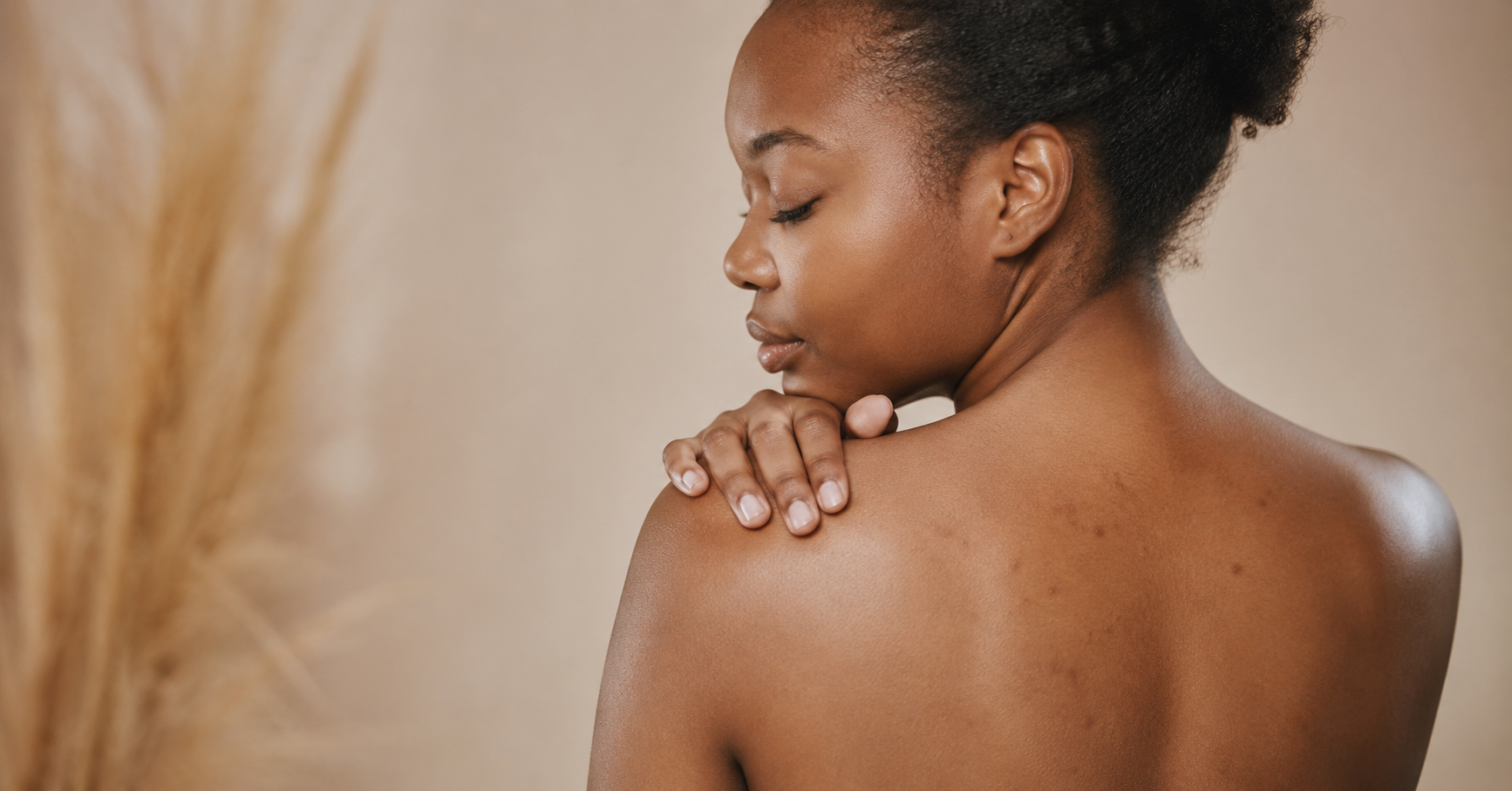
Back acne can be frustrating especially when breakouts leave dark marks long after the spots have healed. Although there is no safe overnight cure, the right routine can reduce active breakouts and gradually improve post-acne marks.
The fastest realistic approach is to treat these as two separate concerns:
-
Active back acne requires acne-fighting ingredients.
-
Post-acne marks require gentle, consistent care that supports an even-looking skin tone.
What causes back acne?
Back acne develops when pores become blocked by excess oil, dead skin cells and bacteria. Hormonal changes can increase oil production, which is why some adults experience body acne around their menstrual cycle, during pregnancy, after changing contraception or alongside conditions such as polycystic ovary syndrome.
Sweat does not directly cause acne, but remaining in sweaty, tight clothing can create an environment that encourages blocked pores and irritation. Heavy, oily body and hair products may also worsen breakouts when they come into contact with the back.
Step 1: Treat the active breakouts
For mild back acne, consider a body wash containing benzoyl peroxide or salicylic acid.
-
Benzoyl peroxide helps reduce acne-causing bacteria and control breakouts.
-
Salicylic acid exfoliates inside the pores, helping to remove excess oil and dead skin cells.
The American Academy of Dermatology recommends allowing a benzoyl peroxide wash to remain on the back for a few minutes before rinsing, according to the product’s directions. Be aware that benzoyl peroxide can irritate sensitive skin and bleach clothing, towels and bedding. Start gradually and avoid introducing several strong active ingredients at once. (American Academy of Dermatology)
Do not scrub your back aggressively. Rough brushes, harsh scrubs and excessive exfoliation can damage the skin barrier, increase inflammation and make post-acne marks more noticeable.
Step 2: Shower after sweating
After exercising or sweating heavily:
-
Shower as soon as reasonably possible.
-
Change out of sweaty clothing.
-
Wash exercise clothes after every use.
-
Choose loose, breathable or sweat-wicking clothing.
-
Clean the skin gently rather than scrubbing it.
These small habits help reduce the combination of sweat, oil, friction and bacteria sitting on the skin.https://nurabeauty.co.za/products/niacinamide-body-wash
Step 3: Keep anything touching your back clean
Wash your bedding, sleepwear, bras and towels regularly. Avoid repeatedly using damp towels, and do not share them.
Also consider your hair routine. Conditioner, hair oil and styling products can run down or rub against your back. Rinse your back after washing your hair, and keep oily hair products away from acne-prone areas where possible.
Step 4: Avoid heavy oils on acne-prone areas
Heavy oils and rich, occlusive products may feel nourishing, but they can be unsuitable for some acne-prone skin. Choose lightweight products and look for descriptions such as “non-comedogenic” or “oil-free.”
Patch-test new products before applying them across your entire back, particularly if your skin is sensitive.
Step 5: Care for post-acne marks separately
The flat brown or dark marks left after a breakout are often post-inflammatory hyperpigmentation, not active acne or permanent scarring. These marks can be more noticeable and longer-lasting on deeper skin tones.
Ingredients such as niacinamide and liquorice extract can be included in a routine designed to improve the appearance of uneven skin tone. They do not replace treatment for active acne, but they may support the appearance of post-acne marks once breakouts are under control. Both ingredients are recognised among topical options used for post-inflammatory pigmentation. (DermNet)
Nura Beauty’s Niacinamide & Liquorice Body Lotion and Body Cream are designed to moisturise the skin and reduce the appearance of uneven tone and post-acne marks. Apply consistently as directed, but avoid using the products on broken or severely inflamed skin. https://nurabeauty.co.za/products/niacinamide-liquorice-body-lotion
A simple back-acne routine
Morning
-
Wash the back gently.
-
Apply a lightweight, non-comedogenic moisturiser if needed.
-
Use broad-spectrum sunscreen on any exposed areas.
Evening or after exercise
-
Shower and change out of sweaty clothing.
-
Use a salicylic acid or benzoyl peroxide wash according to its directions.
-
Rinse thoroughly and pat the skin dry.
-
Apply a suitable moisturiser.https://nurabeauty.co.za/products/niacinamide-liquorice-body-lotion
-
Once the active spots have settled, use the Nura Beauty Niacinamide & Liquorice Lotion or Cream to care for the remaining marks.
Introduce new active products gradually. If your skin becomes very dry, painful or irritated, reduce how frequently you use them and consult a pharmacist or healthcare professional.
A Nura Beauty customer experience
At Nura Beauty, we have received feedback from customers who used our Niacinamide & Liquorice products consistently and noticed that their acne marks appeared less visible.
This reflects one of our most important skincare beliefs: consistency matters more than searching for an overnight solution. Individual results vary, and a moisturising product intended for post-acne marks should not be presented as a treatment for hormonal or severe acne.
How long does back acne take to improve?
Some acne treatments may start showing improvement after approximately four to six weeks, but their fuller effect can take two to four months. (NHS)
Use three months of consistent care as a realistic checkpoint rather than expecting perfectly clear skin within a few days. Post-acne marks may take longer to fade, particularly if new breakouts continue to form.
Taking progress photographs once every four weeks, in the same lighting, can help you notice gradual changes that may be difficult to see from day to day.
When should you see a healthcare professional?
Speak to a doctor or dermatologist if:
-
The acne is deep, painful, cystic or leaving raised or indented scars.
-
It covers a large part of your back or chest.
-
It does not improve after a consistent 8–12-week routine.
-
It appeared suddenly or became significantly worse.
-
You also experience irregular periods, excess facial or body hair, scalp hair thinning or other possible signs of a hormonal condition.
-
The condition is affecting your confidence or emotional well-being.
A healthcare professional can investigate hormonal causes and recommend prescription treatments when over-the-counter skincare is not enough.
Our honest opinion
“Fast” should mean choosing an effective routine early—not attacking the skin with every strong ingredient available.
Treat active acne first, prevent new breakouts through practical hygiene habits, and then care consistently for the marks left behind. Harsh scrubbing, squeezing spots and changing products every few days can cause more irritation without giving any routine enough time to work.
Back acne takes patience, but consistent care can make a meaningful difference.
Ready to care for the marks left behind? Explore Nura Beauty’s Niacinamide & Liquorice Body Lotion and Body Cream for moisturised, more even-looking skin.
Disclaimer: This article is for general educational purposes and does not replace medical advice. Patch-test skincare products before use. Consult a qualified healthcare professional for persistent, painful, severe or suspected hormonal acne.